Blooming Against the Odds: Plant Survival in Western Canada’s Badlands
The western Canada badlands of Alberta, Saskatchewan and Manitoba are spectacular places. They are one of Canada’s amazing landscapes (Photo 1).

Photo 1: Richardson's bitterweed (Hymenoxys richardsonii) in full bloom in the Avonlea badlands, Saskatchewan, Canada. Image by Andy Fyon, June 12, 2012.
But the badlands are harsh. There’s a reason why the Lakota people called them makošiča or “bad lands”. Extreme temperatures, lack of water, high evaporation rates and exposed, unstable, rugged, nutrient-poor clay-rich soils are characteristic of the badlands. Despite these hostile conditions, a wide variety of specialized plant species grow here.
One of my interests is the influence of geology on the types and distributions of native badlands plant species and the variety of ways they’ve adapted to the extreme conditions.
In this note, I summarize some physical, geological and climatic characteristics of the western Canada badlands that are relevant to plants. I highlight some specialized plant species and the adaptations that allow them to thrive on the badlands. In a companion note entitled Western Canada Badlands: Where Geology, Life, Culture and Heritage Meet, I review their geological characteristics in more detail. That companion note is a primer for this note on badlands plants.
Scope of Badlands Plant Species Information
This note does not include a comprehensive list of all known plant species that grow on the badlands of western Canada. The few plant species I illustrate possess some of the key adaptations that enable them to thrive on the badlands. Many of the plant species I discuss also grow in other habitats, like the dry prairie grasslands, because their adaptations are broad enough to ensure survival in other habitats.
Land Acknowledgment
I acknowledge that the badlands I have visited over the last 20 years occur in the homelands of the Métis and several First Nations, including the Blackfoot, the Tsuutʼina, the Assiniboine and the Gros Ventre nations. I recognize and thank the First Nations and Métis people as stewards of this land. Acknowledgement of these peoples and their land stewardship reminds us all to reflect on and respect their unique relationship to this land. My acknowledgment is also an invitation for all of us to identify and engage in actions that respect and reinforce Canada’s commitments made in the treaties, to pursue the recommendations of the Truth and Reconciliation Commission reports and to respect Indigenous rights. Remember that all settlers are Treaty people. Miigwetch – thank you.
Disclaimer
I am a geologist by training. I see the world through “geological eyes.” I have not formally studied botany. I consider myself to be an avid, self-taught botanical student, particularly in regards to the relationship between geology and the types and distributions of some plant species. In this note, I share some of my observations, but I rely on the research of others. I make generalizations to help provide information to a non-geological audience. I understand that generalizations may be inappropriate, incorrect and even misleading, so please consider this note to be my subjective musings, supported by observations, but definitely not of research quality.
Does Geology Matter To Plants?
There is considerable research on edaphic factors – the physical, chemical and biological characteristics of soil substrates like texture, structure, pH, moisture and nutrient availability. Edaphic factors directly influence the growth, distribution, composition, diversity and even the evolution of plant communities and soil organisms. Many plant ecologists and geoecologist pioneers in the geobotany field, like Arthur Kruckeberg and Nishanta Rajakaruna, emphasize that most edaphic factors are directly related to the underlying geology.
But, local climate also has an important influence on plant species distributions. For example, climate sets broad-scale limits on vegetation (e.g., subarctic tundra vs. prairie grassland). Geology and the derived soils define which plant species live where within those broader zones by creating distinct habitats. This is illustrated by vegetation growth on the Tablelands in Gros Morne National Park (Photo 2). Weathered brown serpentinite rock is almost devoid of vegetation because high concentrations of nickel, copper, cobalt, iron and magnesium in the serpentinite are poisonous to most plants. Conversely, the sedimentary rock that makes up the mountain at the end of the valley is heavily vegetated because sedimentary rocks do not contain elevated concentrations of poisonous metals. In the above example, the local climate is virtually identical between the two hills. Different geological substrates are the dominant edaphic factors that influence the plant distribution. Yes, geology matters!

Photo 2: The orange serpentinite rock is almost free of vegetation because its chemistry is poisonous to most plants. In contrast, the well-vegetated mountain rock at the end of the valley has a rock geology and geochemistry that support plant life. Location: Tablelands, Gros Morne National Park, Newfoundland and Labrador, Canada. Image by Andy Fyon, June 17, 2011.
What Are Badlands?
The badlands of western Canada are landscapes where 75-million-year-old, soft sedimentary rocks, consisting of claystone, shale, sandstone and coal, were deeply eroded and carved into canyons, gullies, buttes and hoodoos by torrential meltwater rivers at the end of the last ice age, about 17,000 years ago (Photo 3). Erosion by wind and rain continues. The western Canada badlands have a semi-arid continental climate consisting of hot summers and cold winters. But, because of the geology, the badlands soils are nutrient poor, unstable and sometimes alkaline. Such soil conditions discourage the growth of vegetation, except by specialized species. For a more detailed description of badlands characteristics and features, please check out my companion note entitled Western Canada Badlands: Where Geology, Life, Culture and Heritage Meet.

Photo 3: A typical badlands landscape in western Canada, characterized by deep canyons and white, black and brown rock layers. Location: Dinosaur Provincial Park, Alberta, Canada. Image by Andy Fyon, Aug, 10, 2019.
Some Badland Characteristics and Plant Adaptations
I summarize some characteristics of the badlands as well as the adaptations of a few representative and common badlands plant species in Table 1. The most important insight drawn from this summary is that most badlands plant species possess more than one adaptation that enables them to thrive in this hostile environment.
<Table 1 is located at the end of the webpage>
Drought and water scarcity
Plants must survive periods of drought during intense summer heat when water evaporates quickly. Deep taproots, which reach moist, deeper soils are one adaptation. Another involves shallow, wide-spread root systems, which enable some plant species to quickly capture light rain. Other plants, like succulent cacti, address extended periods of drought by storing water in thickened stems.
Extreme temperature changes and water loss
The badlands climate is highly variable, ranging from hot, dry summers to cold winters. Extreme temperatures are amplified in protected canyons or gullies, where air movement is limited. The geological processes that eroded the canyon walls created steep, south-facing slopes, which are subject to intense sunlight. Plants must endure intense solar radiation during the summer, both from direct sunlight and from its reflection off the light-coloured soil. These conditions lead to water loss by transpiration. Adaptations to mitigate the impact of intense sunlight include: a) narrow leaves to reduce the plant area that captures sunlight (e.g., longleaf wormwood, Artemisia longifolia); b) light-coloured foliage to reflect sunlight and reduce leaf temperature (e.g., longleaf wormwood, Artemisia longifolia); c) fine white hairs on vegetation that block sunlight (e.g., scarlet globe-mallow, Sphaeralcea coccinea); d) waxy coatings on leaves and stems to reduce moisture loss (e.g., wax-leaved beardtongue, Penstemon nitidus); and e) photosynthesis that involves atmospheric gas exchange during the cooler, more humid night (e.g., plains prickly pear cactus, Opuntia polyacantha).
Unstable clay-rich soil
When weathered, badlands rocks are transformed into bentonite clay. This clay swells when wet and shrinks and cracks when dry. This process disturbs the soil texture and can inhibit water penetration into the soil. Clay-rich soils are also prone to rapid erosion by wind and rain, which creates steep slopes and rapid loss of the soil needed by plants (Photo 4). Some plants tolerate this changing, unstable ground by anchoring themselves with long tap roots (e.g., rubber rabbitbrush, Ericameria nauseosa).

Photo 4: The collapse or landslide of a steep wall illustrates the instability of badlands soils. Location: Castle Butte, Big Muddy badlands, Saskatchewan, Canada. Image by Andy Fyon, June 14, 2012.
Drying or freezing seasonal winds
The open badlands are subject to persistent winds that dry out plants in summer and freeze them in winter. Fine hairs on some plant species help block the winds (e.g., Richardson’s bitterweed, Hymenoxys richardsonii). Some plants, like the plains prickly pear cactus (Opuntia polyacantha), survive the cold winter by producing special antifreeze chemicals in their cells. Other plants have a low mound-shaped form to minimize the impact of the wind (e.g., Hood's phlox, Phlox hoodii).
Short growing season
Due to the short growing season, plants must complete their life cycle rapidly to capitalize on moisture from the spring melt. Some plants, like the hoary aster (Dieteria canescens), are adapted to live as annuals, biennials or short-lived perennials to accommodate the unpredictable seasons. Winterfat (Krascheninnikovia lanata) has the ability to germinate its seeds at subfreezing temperatures, thus extending its life cycle into early spring, where frost is a possibility. Its early-season germination capitalizes on the soil moisture available from spring snow melt and avoids the high summer temperatures.
Nutrient-poor soil with low organic-matter
Most badlands soil is nutrient poor. There is little, if any, organic matter. To compensate, most badlands plant species have developed mycorrhizal relationships with soil fungi. Soil scientists call the soil organisms arbuscular mycorrhizal fungi (AMF). Both plants and fungi benefit from this important symbiotic relationship, which is associated with 80 to 90% of terrestrial plant roots. And yet, this relationship is invisible unless you look closely at the plant’s roots and the adjacent soil. Fungi colonize plant roots and the fungi spread their threads, called hyphae, out into the adjacent soil. The large mass of fungal hyphae acts like an extended root system for the plants, increasing access to a large volume of soil and its contained water and nutrients. AMFs act as natural biofertilizers, providing plants with water, nutrients and even pathogen protection. In exchange, the plant transfers sugar-based food products created by photosynthesis to the fungi.
Examples: Where Plants and Badlands Meet
The following descriptions of some badlands plant species include a brief summary of specific adaptations that enable them to grow in the badlands.
Wax-leaved beardtongue (Penstemon nitidus) and white beardtongue (Penstemon albidus)
Wax-leaved beardtongue (Penstemon nitidus) has a number of adaptations typical of drought-tolerant, dry-land plants, including: a) thick leaves to reduce water loss through transpiration (Photo 5) and to store water for use during periods of drought; b) a waxy, grey-green leaf coating that helps reflect intense sunlight; c) a deep tap root system to access moisture located beneath the soil surface; and d) the ability to bloom early, before the summer heat and drought.

Photo 5: Wax-leaved beardtongue (Penstemon nitidus), growing in harsh badlands habitat, is adapted to conserve water loss. Location: Willow Creek Hoodoos Trail, in the Red Deer River Valley, Alberta, Canada. Image by Andy Fyon, May 30, 2019.
While apparently more common on the dry grasslands, white beardtongue (Penstemon albidus), shares many of the adaptations of P. nitidus and may also be encountered in the badlands (Photo 6). Its adaptations include: a) a deep root system; b) a clump-forming or low-profile growth habit; c) thick, narrow, pale blue-green-gray leaves; d) high drought tolerance; e) an implied symbiotic relationship with mycorrhizal fungi; and f) early to mid-season flowering.
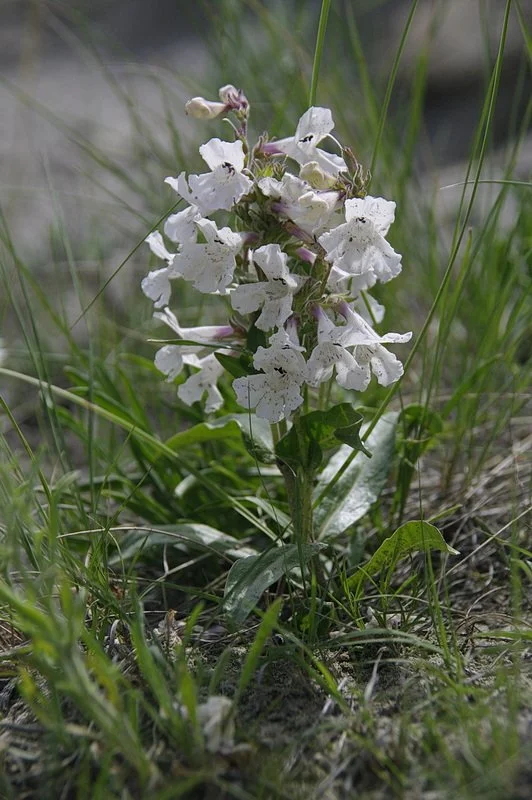
Photo 6: White beardtongue (Penstemon albidus) growing on the edge of the Avonlea badlands, Saskatchewan, Canada. It has many adaptations that enable it to survive in the western Canada badlands. Image by Andy Fyon, June 11, 2012.
Plains prickly pear cactus (Opuntia polyacantha)
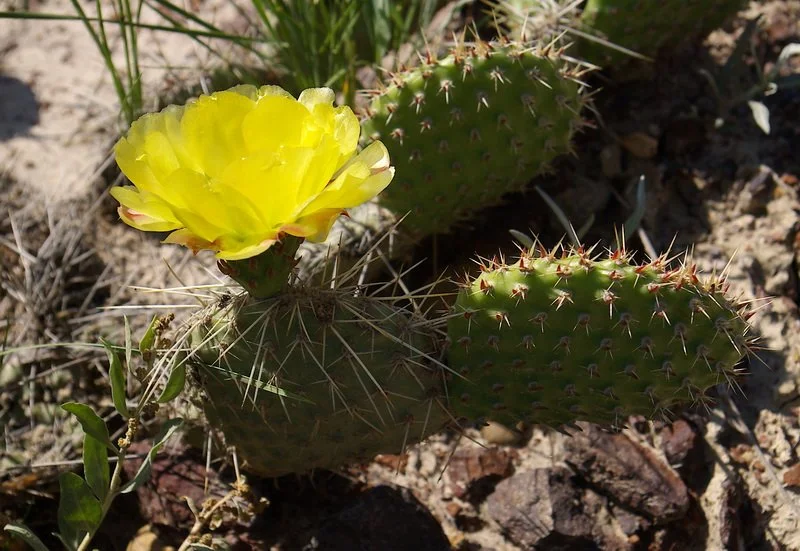
This succulent plant is well adapted to the badlands (Photo 7). I was fascinated to learn that the spines are actually modified leaves with a very small surface area. The spines are attached to thickened, flattened, water-storing, succulent stems called cladodes. The cladodes have specialized parenchyma cells that hold water, an ideal adaptation for the arid badlands. In addition, the waxy coating on the cladodes and yellow flowers decreases water loss. Like other cacti, O. polyacantha carries out CAM photosynthesis, known scientifically as Crassulacean Acid Metabolism. This means the cacti open their stomata at night to take in atmospheric carbon dioxide when the air is cooler and more humid. The carbon dioxide is photosynthesized during the day while the stomata are closed, minimizing water loss during the hot day. Opuntia polyacantha survives the cold winter by dehydrating and shrivelling its cladodes to prevent cells from freezing and bursting. It also produces special antifreeze chemicals in its cells to prevent damage from freezing.
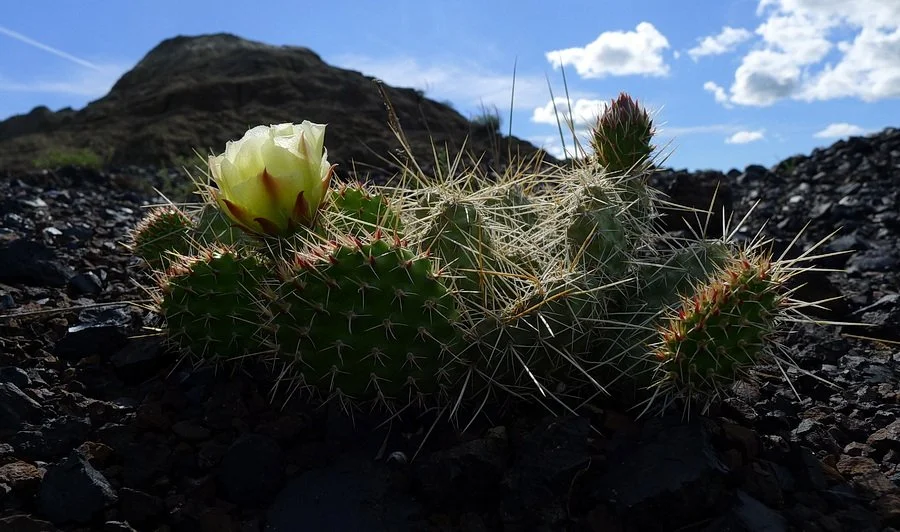
Photo 7: Plains prickly pear cactus (Opuntia polyacantha) in bloom in the Horseshoe Canyon badlands, near Drumheller, Alberta, Canada. Image by Andy Fyon, June 21, 2014.
Longleaf wormwood (Artemisia longifolia):
Artemisia longifolia has long, narrow, grey-silver-green foliage that is covered by fine hairs (Photo 8). Together, these adaptations reduce the amount of intense, summer solar radiation that hits the plant thus reducing water loss. The fine hairs also create a boundary layer of still air that helps block some of the desiccating winds. Those hairs may even trap moisture on the leaf surface.

Photo 8: Longleaf wormwood (Artemisia longifolia) has long, narrow, grey-green leaves to reduce the impact of direct and reflected sunlight, conserving water. Location: Horsethief Canyon badlands, near Drumheller, Alberta, Canada. Image by Andy Fyon, June 22, 2014.
Rubber rabbitbrush (Ericameria nauseosa):
The unstable nature of badlands soil makes it difficult for plants to gain a roothold, especially on steeply sloping land. Some plants have deep, extensive root systems that anchor them. One example is the shrub rubber rabbitbrush (Ericameria nauseosa) (Photo 9) whose roots extend up to 3.5 meters (11 feet) in depth. Ericameria nauseosa is cold hardy to at least - 40°C (- 40°F). It grows in a wide range of soils, including heavy clay with low fertility, which is typical of some badlands, and acidic to strongly alkaline soils. It is somewhat salt tolerant.

Photo 9: The yellow flowers of rubber rabbitbrush (Ericameria nauseosa) of the arid badlands. Location: Claybank Brick Plant, Saskatchewan, Canada. Image by Andy Fyon, July 24, 2011.
During hot dry periods, its deep roots reach moist soil well below the land’s surface, making it drought tolerant. I have seen many E. nauseosa where the upper root or lower stem (or both) was exposed for tens of centimetres above the land’s surface due to erosion and removal of the soil (Photo 10). This illustrates how quickly the badlands soil is eroded and it demonstrates the role of the deep root anchor to hold the plant in place. That exposed woody stem may actually be a caudex, which is capable of storing water for use during droughts.

Photo 10: The woody stem or upper root of this rubber rabbitbrush (Ericameria nauseosa) is exposed, causing the plant to stand about 20 cm (8 inches) above the surface of the soft badlands soil. This illustrates how much soil was eroded after the plant gained a foot-hold. Location: Castle Butte area, Big Muddy badlands, Saskatchewan, Canada. Image by Andy Fyon, May 29, 2019.
Rubber rabbitbrush’s seeds are wind-dispersed, remaining viable for about 3 years. They germinate when there is adequate moisture, helping the plant propagate after the passage of one or two particularly inhospitable summers. Like other badland plant species, its narrow, linear, grey-green leaves and stems may be covered with fine hairs, helping to reflect intense sunlight. Incidentally, its unusual common name, rubber rabbitbrush, reflects its use by rabbits as cover or protection from predators and the use of its sap that was used as a source of rubber, resins and synthetics.
Hoary aster (Dieteria canescens):
Hoary aster (Dieteria canescens) relies on several adaptations to survive in the badlands: a) its narrow grey leaves are covered with fine white hairs that reflect intense sunlight and reduce water loss (Photo 11); b) its deep tap root accesses water sources well below the land surface; c) its low, cushion-like or sprawling growth habit reduces exposure to drying winds and evaporation; d) it tolerates a wide range of soil types and pH, including disturbed, clay-rich and alkaline soils; e) it flowers in late summer to early fall after the hottest part of the summer; and f) it can be an annual, a biennial, or a short-lived perennial to accommodate the unpredictable, harsh badland conditions.

Photo 11: Hoary aster (Dieteria canescens) uses a variety of adaptations to survive in the harsh badlands. Location: Horsethief Canyon badlands, near Drumheller, Alberta, Canada. Image by Andy Fyon, Aug. 11, 2023.
Richardson’s bitterweed (Hymenoxys richardsonii):
Richardson’s bitterweed (Hymenoxys richardsonii), also known informally as Colorado rubberweed or Colorado bitterweed, has several adaptations to enhance survival in the badlands (Photo 12): a) it has a thick woody taproot or woody caudex capable of reaching deep soil moisture and helping to enhance survival during periods of drought; b) it often grows in a low, bushy or tufted form to minimize exposure to drying winds; c) its narrow, linear leaves reduce surface area, thus reducing water loss by transpiration and intercepting intense sunlight; and d) its leaf surfaces are often covered by fine white hairs (Photo 13) that reflect intense sunlight, which also reduces water loss. Note, Richardson’s bitterweed (Hymenoxys richardsonii) is poisonous to livestock.

Photo 12: Richardson’s bitterweed (Hymenoxys richardsonii) growing among rusty- weathering ironstone fragments. Location: Avonlea badlands, Saskatchewan, Canada. Image by Andy Fyon, June 12, 2012.
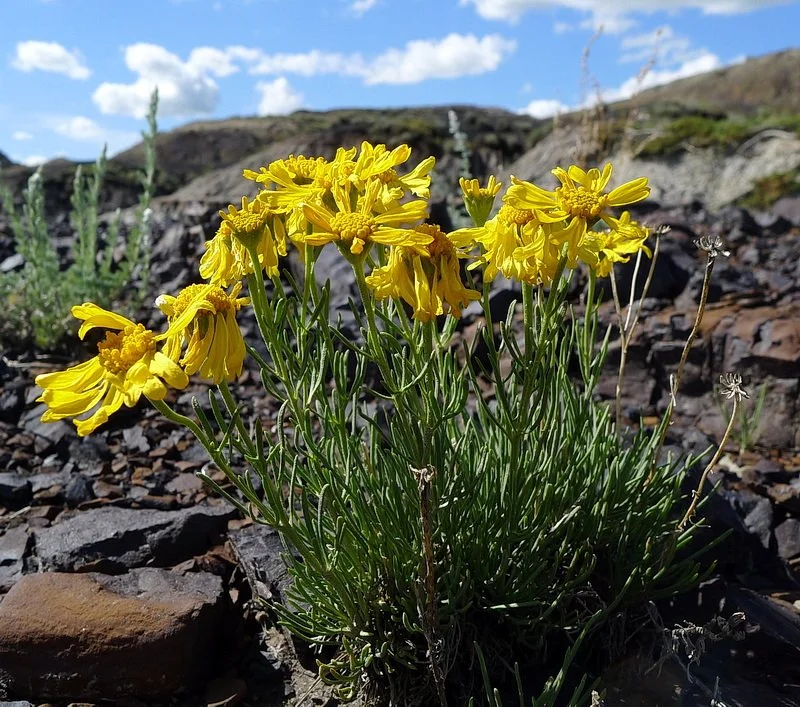
Photo 13: Richardson's bitterweed (Hymenoxys richardsonii) in bloom growing among rusty ironstone. The surface of the narrow linear leaves is covered with fine hairs that reflect intense sunlight and minimize water loss. Location: Horseshoe Canyon badlands, near Drumheller, Alberta, Canada. Image by Andy Fyon, June 21, 2014.
Scarlet globe-mallow (Sphaeralcea coccinea):
Scarlet globe-mallow (Sphaeralcea coccinea) is a species I have seen on the edges of badlands, close to grasslands. It stands out because of its distinctive orange-coloured flowers (Photo 14). Its narrow leaves and stems and their fine hair cover (Photo 15) reduce the amount of intense sunlight that reaches the plant. It is reported to have a deep woody taproot, which may extend up to 90 cm (3 feet), which accesses deeply buried moist soil, making the plant drought tolerant. Its creeping rhizomes help stabilize the erodible badland soil.

Photo 14: The orange blossoms of scarlet globe-mallow (Sphaeralcea coccinea) help it stand out on the tan-coloured arid soil. The narrow, lobed leaves and the white hairs on the stems and leaf surfaces reflect intense sunlight. Location: East Block, Grasslands National Park, Saskatchewan, Canada. Image by Andy Fyon, July 25, 2011.
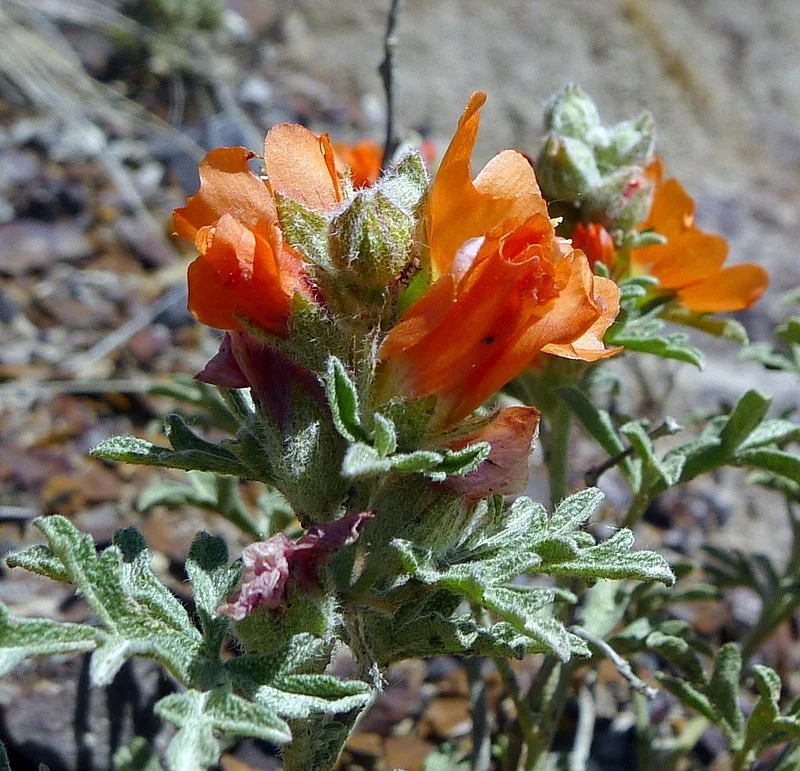
Photo 15: A close-up of scarlet globe-mallow (Sphaeralcea coccinea) showing the fine hairs on its leaves and stems. Location: Royal Tyrrell Museum, Drumheller, Alberta, Canada. Image by Andy Fyon, June 22, 2014.
Hood's phlox (Phlox hoodii):
Hood's phlox (Phlox hoodii) (Photo 16), also known as spiny phlox, grows in a low, mat-shaped form. I suspect I’ve missed this species more often than I’ve seen it, especially after it has finished flowering.
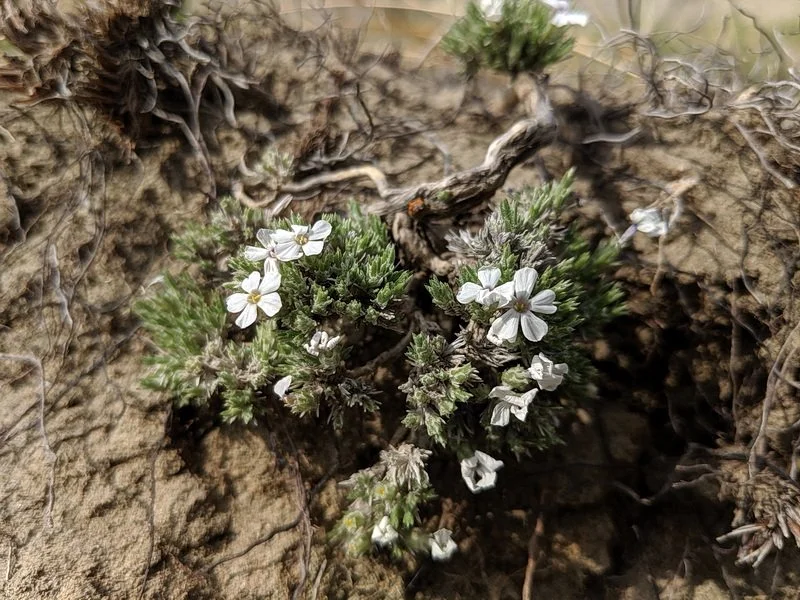
Photo 16: Hood's phlox (Phlox hoodii) is an early spring-flowering badlands species, shown here growing in an area where erosion has removed much of the clay-rich, nutrient-poor soil. Location: Castle Butte, Big Muddy badlands, Saskatchewan, Canada. Image by Andy Fyon, May 29, 2019.
Adaptations that make it drought tolerant include: a) its mat-shaped, low-profile form reduces exposure to the persistent, drying badland winds; b) its woody taproot extends up to 90 cm (37 inches) below the land surface to reach deep soil moisture; c) its small narrow leaves minimize surface area, thus reducing water loss by transpiration; d) its fine white-woolly hairs on the leaf surfaces help retain moisture and shade the plant (Photo 17); e) it retains old leaves, so that the scarce nutrients already invested in leaf growth are not wasted; f) it is one of the earliest spring-blooming badland plant species, which ensures that its growth cycle, including the production of seeds, is completed before the onset of summer heat and drought; g) its woody root crown, or caudex, allows it to persist after being damaged by drought, grazers, fire or erosion (Photo 16); and h) its mycorrhizal association with the soil fungi helps deliver nutrients to the plant’s roots from a large volume of nutrient-poor soil.
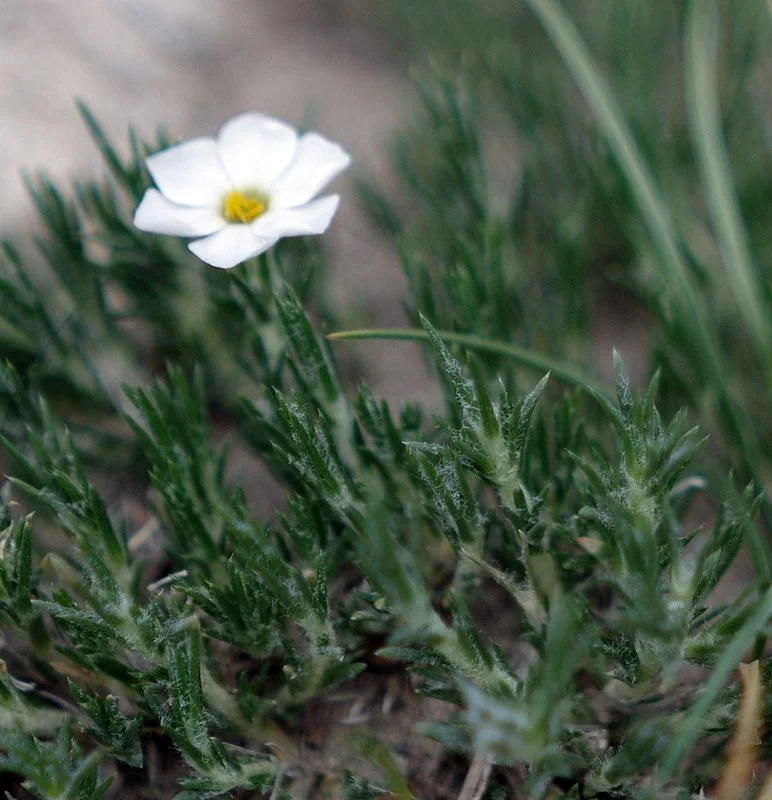
Photo 17: Hood’s phlox (Phlox hoodii) showing the fine white hairs on its leaves, which reflect intense sunlight. Location: Castle Butte, Big Muddy badlands, Saskatchewan, Canada. Image by Andy Fyon, May 29, 2019.
Tufted evening-primrose (Oenothera cespitosa ssp. cespitosa):
Tufted evening primrose (Oenothera cespitosa ssp. cespitosa), sometimes called gumbo primrose (Photo 18), is a native species that appears to be too fragile to face the harsh realities of the badlands. But, first impressions can be misleading: a) it has a thick woody taproot that anchors the plant to eroding slopes; b) its extensive root system accesses deep soil moisture; c) it avoids the drying daytime sun by blooming at dusk and overnight to minimize water loss; d) it has a low-growing tufted form to minimize exposure to drying winds; e) its grey-green foliage is covered by fine hairs, which reflects sunlight and deflects drying winds; and f) it has the ability to go dormant during the hottest and driest summer periods.
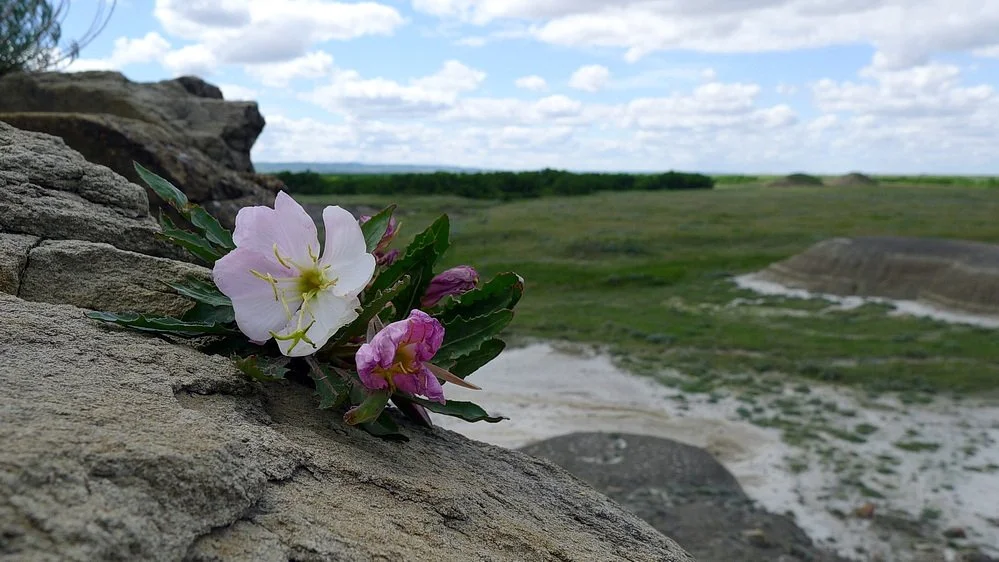
Photo 18: Tufted evening primrose (Oenothera cespitosa ssp. cespitosa) coming to the end of its nocturnal bloom in the morning. Location: Avonlea badlands, Saskatchewan, Canada. Image by Andy Fyon, June 11, 2012.
Yellow buckwheat (Eriogonum flavum):
Yellow buckwheat (Eriogonum flavum) is also known by its common names alpine golden wild buckwheat, yellow umbrella-plant and yellow wild buckwheat (Photo 19).

Photo 19: Yellow buckwheat (Eriogonum flavum) growing on a south-facing sandstone ledge. Location: Avonlea badlands, Saskatchewan, Canada. Image by Andy Fyon, June 12, 2012.
Like other badlands plant species, it has several adaptations that help it survive in the badlands and grasslands: a) its taproot reaches deep moist soil; b) it has a mat-forming or tufted form that reduces the impact of drying winds; c) its leaves and stems are often covered by fine hairs, which help reduce water loss by shading leaf surfaces, trapping a boundary layer of still air, limiting transpiration related to intense sun and drying winds, and reflecting direct and reflected sunlight; and d) the mat-form means its photosynthetic surfaces are close to the ground where the microclimate is slightly cooler and more humid. Although it produces seed infrequently, yellow buckwheat is long-lived, which helps populations remain stable over time. It is also tolerant of soil movement, an advantage in the badlands where soil erosion is ongoing (Photo 20).

Photo 20: Yellow buckwheat (Eriogonum flavum) growing on top of a small rock mound demonstrating the ability of its roots to stabilize erosion of the badlands soil. Location: Suspension bridge badlands area, Red Deer River Valley, near Drumheller, Alberta, Canada. Image by Andy Fyon, June 22, 2014.
Creamy milk-vetch (Astragalus racemosus):
Creamy milk-vetch (Astragalus racemosus) is also known by the common names racemose milk-vetch, alkali milk-vetch and cream milk-vetch. In Saskatchewan, its conservation status is considered to be imperiled (S2). I have seen it growing on the clay-rich flats in the Avonlea badlands (Photo 21), but it appears to be common in the Moist Grasslands and Aspen Parkland ecoregions.
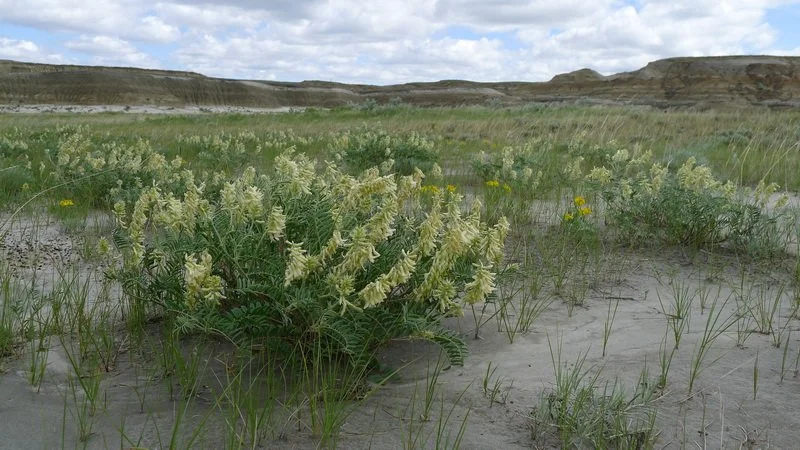
Photo 21: Creamy milk-vetch (Astragalus racemosus) growing on the clay-rich flat lands of the Avonlea badlands, Saskatchewan, Canada. Image by Andy Fyon, June 11, 2012.
Creamy milk-vetch has several adaptations that enable it to grow in the clay-rich soil typical of these habitats, especially the clay flats and hillsides that characterize the badlands: a) as a perennial, it regrows each spring from a persistent rootstock, giving it a jumpstart over annuals at a time when moisture is limited; b) its deep woody taproot anchors it securely into the unstable, eroding clay slopes and ensures access to deep soil moisture during periods of drought; c) its stems and the undersides of its leaflets are covered in fine hairs, which reflect intense sunlight and create a boundary layer of still air that reduces water loss by shading the plant surfaces from direct sunlight and drying winds; d) like other legumes, its root system supports bacteria that fix atmospheric nitrogen, allowing it to grow in the nutrient-poor badlands soils; e) its bushy spreading form helps it adapt to varied, often steep, badlands terrain; and f) it is tolerant of challenging soil chemistry, including selenium-rich soils and alkaline, clay-based soils that are typical of some badlands.
Note that some badlands soils contain elevated concentrations of the element selenium, a result of rock weathering. Some plants, like Astragalus racemosus, concentrate selenium, but do not require selenium to grow (Photo 22). It is known as a facultative or secondary selenium absorber. Nevertheless, A. racemosus can contain concentrations of selenium that are potentially toxic to cattle and other livestock. The bioaccumulation of selenium is an adaptation developed to reduce grazing pressure by animals, which enhances the survival of A. racemosus as it struggles to grow in the harsh badlands conditions.
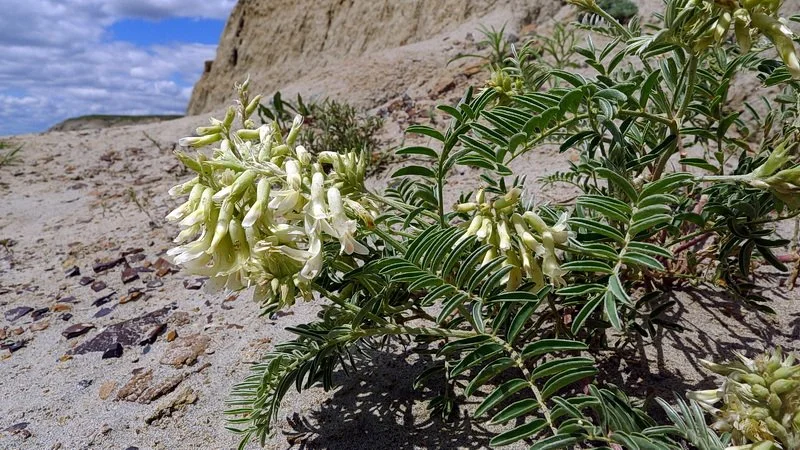
Photo 22: Creamy milk-vetch (Astragalus racemosus) growing close to the steep slope at the edge of the Avonlea badlands, Saskatchewan, Canada. Image by Andy Fyon, June 11, 2012.
Summary
When I first set foot in the badlands of western Canada, I anticipated dramatic rock formations and striking geological features. What I did not expect was abundant plant life. I was astonished to see a diversity of native plants thriving in such a harsh and unforgiving landscape. Almost immediately, two questions came to mind: a) does geology influence plant diversity in the badlands? and b) how do plants manage to survive here at all?
The answer to the first question is a resounding YES! The story began 75 million years ago, when geological processes laid down the soft sedimentary rocks that now comprise the badlands. Over time, weathering and geochemical processes transformed these rocks into clay-rich, nutrient-poor soils with little ability to retain moisture. Much more recently, at the end of the last ice age, about 17,000 years ago, erosion by torrential meltwater rivers, derived from the melting ice sheet, carved deep badlands canyons with steep, unstable slopes. Erosion continues today. The badlands we see are the culmination of 75 million years of geological activity.
The answer to the second question is that the badlands plant species are special. They possess an amazing suite of adaptations, which enable them to endure intense summer heat; frigid winter cold; prolonged droughts; shifting nutrient-poor soils and intense sunlight.
The badlands are full of surprises, both geological and botanical. May you have the privilege of hiking the badlands. And if not, I hope these words allow you to glimpse and appreciate their quiet, resilient beauty.

_on_Seedskadee_National_Wildlife_Refuge_02_(14368786066).jpg)
Andy Fyon, Feb. 12/26; Feb. 25/26, March 2/26.
Quisque iaculis facilisis lacinia. Mauris euismod pellentesque tellus sit amet mollis.